
IBM Power 11 Hardware & Software Reseller | Midland Information Systems | IBM Gold Partner IBM Power 11 Hardware & Software Reseller | Midland Information Systems | IBM Gold Partner
  • Power11
    • IBM Power 11 Pricing
    • IBM S1122 9824-22A Power11
      • IBM S1122 9824-22A ERGR 4-Core Power11 Processor
      • ERGR 8-Core 3.6-4 GHz eSCM Power 11 Processor
      • ERGQ 10-Core 3.05-4 GHz eSCM Power11 Processor
      • EBG8 16-Core 3-4.2 GHz DCM Power11 Processor
      • ERGQ 20-Core 3.05-4 GHz eSCM Power11 Processor
      • EBG9 24-Core 2.65-4.15 GHz DCM Power11 Processor
      • EBGA 30-Core 2.4-3.95 GHz DCM Power11 Processor
      • EBG8 32-Core 3-4.2 GHz DCM Power11 Processor
      • EBG9 48-Core 2.65-4.15 GHz DCM Power11 Processor
      • EBGA 60-Core 2.4-3.95 GHz DCM Power11 Processor
    • IBM S1124 9824-42A Power11
      • EP3X 16-Core 3.4-4.2 GHz DCM Power11 Processor
      • EP3H 24-Core 3.05-4.15 GHz DCM Power11 Processor
      • EP3Y 30-Core 2.8-3.95 GHz DCM Power11 Processor
      • EP3Y 60-Core 2.8-3.95 GHz DCM Power11 Processor
      • EP3H 48-Core 3.05-4.15 GHz DCM Power11 Processor
      • EP3X 32-Core 3.4-4.2 GHz DCM Power11 Processor
    • IBM L1122 9856-22H Power11
    • IBM L1124 9856-42H Power11
    • IBM E1180 9080-HEU Power11
    • IBM E1150 9043-MRU Power11
  • Blog
  • About
  • 🛒
  • 🟢 Login

What is an AS400?

The IBM AS/400, now known as the IBM iSeries, is a line of midrange computer systems designed for small to medium-sized businesses and enterprise departments. 

It was first introduced by IBM in 1988 as a successor to the System/36 and System/38 minicomputers.

The AS/400 was revolutionary for its time due to its integrated hardware and software architecture, which provided a highly reliable and secure computing platform. 

It featured a unique operating system called OS/400 (now IBM i), which was specifically tailored for business computing needs, offering built-in database management, security, and system management capabilities.

Here's a brief history of the IBM AS/400 development.


The Origins. 

The AS/400 evolved from IBM's earlier minicomputer systems, the System/36 and System/38, which were designed for small and medium-sized businesses. These systems provided integrated software and hardware solutions for business computing needs.

Launch. 

IBM introduced the AS/400 in 1988 as a replacement for the System/36 and System/38. It was marketed as a single, integrated platform for a wide range of business applications, from accounting and inventory management to manufacturing and database processing.

Architecture. 

The AS/400 architecture was based on a single-level storage model, which abstracted the underlying hardware complexities and provided a unified memory space for both programs and data. This architecture contributed to the system's reliability, scalability, and ease of use.

OS/400 Operating System. 

The AS/400 ran on the OS/400 operating system, which was specifically designed for business computing. OS/400 offered advanced features such as integrated database management (using DB2/400), security controls, and a high-level programming language called RPG (Report Program Generator).

Evolution. 

Over the years, the AS/400 platform evolved to keep pace with advancements in technology. IBM introduced faster processors, expanded memory and storage options, and improved software capabilities to meet the changing needs of businesses.

Rebranding. 

In the early 2000s, IBM rebranded the AS/400 as the IBM eServer iSeries, reflecting its integration with the broader e-business initiatives. Later, it was rebranded again as the IBM System i.

Continued Development. 

Despite changes in branding and marketing, the underlying AS/400 architecture and OS/400 operating system remained largely unchanged. IBM continued to enhance the platform with new features, performance improvements, and support for emerging technologies.

Transition to IBM i. 

In recent years, IBM has focused on modernizing the platform while retaining compatibility with existing applications and data. The AS/400 and its successors are now collectively known as the IBM iSeries or simply IBM i, reflecting IBM's commitment to the platform as a strategic business solution.
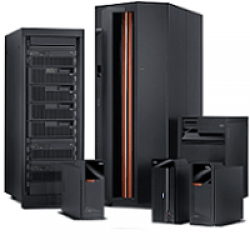
Overall, the AS/400 (IBM iSeries) has played a significant role in the evolution of business computing, providing a reliable, integrated platform for mission-critical applications across various industries.

  • 19.png

Listing Details

« Previous listing in AS400 | Next listing in AS400 »
© 2026 Midland Information Systems | IBM iSeries New & Used Systems | Upgrades for Software and Hardware. Midland Information Systems 2130 Platinum Rd, Apopka, FL 32703
  • Power11
    • IBM Power 11 Pricing
    • IBM S1122 9824-22A Power11
      • IBM S1122 9824-22A ERGR 4-Core Power11 Processor
      • ERGR 8-Core 3.6-4 GHz eSCM Power 11 Processor
      • ERGQ 10-Core 3.05-4 GHz eSCM Power11 Processor
      • EBG8 16-Core 3-4.2 GHz DCM Power11 Processor
      • ERGQ 20-Core 3.05-4 GHz eSCM Power11 Processor
      • EBG9 24-Core 2.65-4.15 GHz DCM Power11 Processor
      • EBGA 30-Core 2.4-3.95 GHz DCM Power11 Processor
      • EBG8 32-Core 3-4.2 GHz DCM Power11 Processor
      • EBG9 48-Core 2.65-4.15 GHz DCM Power11 Processor
      • EBGA 60-Core 2.4-3.95 GHz DCM Power11 Processor
    • IBM S1124 9824-42A Power11
      • EP3X 16-Core 3.4-4.2 GHz DCM Power11 Processor
      • EP3H 24-Core 3.05-4.15 GHz DCM Power11 Processor
      • EP3Y 30-Core 2.8-3.95 GHz DCM Power11 Processor
      • EP3Y 60-Core 2.8-3.95 GHz DCM Power11 Processor
      • EP3H 48-Core 3.05-4.15 GHz DCM Power11 Processor
      • EP3X 32-Core 3.4-4.2 GHz DCM Power11 Processor
    • IBM L1122 9856-22H Power11
    • IBM L1124 9856-42H Power11
    • IBM E1180 9080-HEU Power11
    • IBM E1150 9043-MRU Power11
  • Blog
  • About
  • 🛒
  • 🟢 Login